

Are there any limitations to the viscosity of liquids that can be used in cosmetic dropper bottles?
Oct 09, 2026
Leave a message
Hey there! As a supplier of Cosmetic Dropper Bottles, I've been getting a lot of questions lately about the limitations of the viscosity of liquids that can be used in these bottles. So, I thought I'd write a blog post to share my insights on this topic.
First off, let's talk about what viscosity is. Viscosity is a measure of a fluid's resistance to flow. In simpler terms, it's how thick or thin a liquid is. When it comes to cosmetic dropper bottles, the viscosity of the liquid you use can have a big impact on how well the bottle works.
One of the main limitations of using high - viscosity liquids in dropper bottles is the flow rate. High - viscosity liquids, like thick creams or some heavy essential oil blends, flow very slowly. This can make it difficult to dispense the liquid through the dropper. You might find that the liquid doesn't come out at all or only comes out in small, inconsistent drops.
For example, if you're using a Skin Care Essential Oil Glass Bottle and you try to fill it with a thick hair serum, you'll probably struggle to get the serum to flow through the dropper tip. The narrow opening of the dropper is designed for liquids with a certain range of viscosity, and thick liquids can clog it up.
On the other hand, low - viscosity liquids, such as water - based toners or some light essential oils, flow very easily. While this might seem like a good thing, it can also be a problem. If the liquid is too thin, it might come out of the dropper too quickly, making it hard to control the amount you dispense. You could end up using more product than you intended.
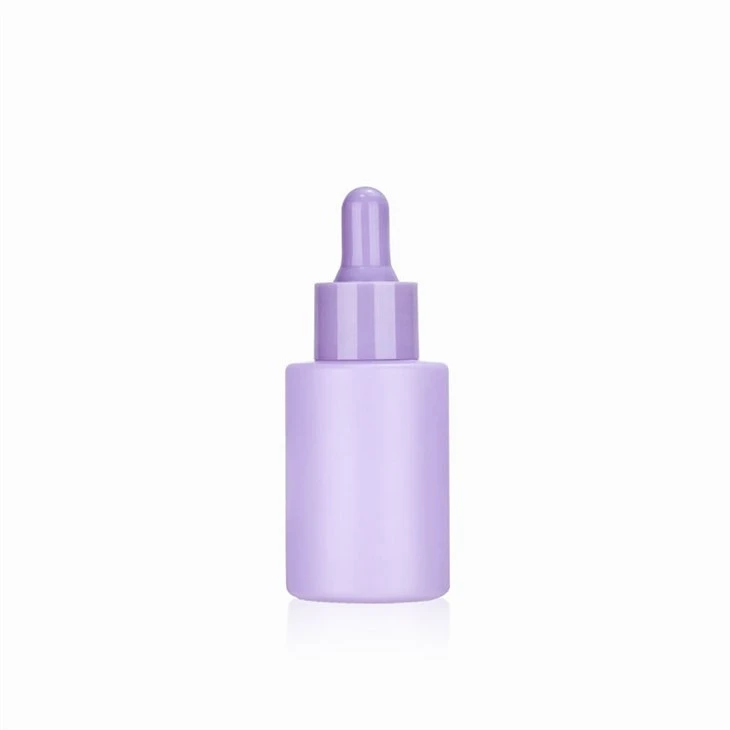
Let's say you have a 30ml Gradient Serum Essential Oil Bottle Skin Care Glass Container With Dropper filled with a very thin facial mist. When you squeeze the dropper, the liquid might just gush out in a stream instead of dropping out in a controlled manner.
Now, the ideal viscosity for a liquid in a dropper bottle is somewhere in the middle. It should be thick enough to hold its shape and not spill out easily, but thin enough to flow smoothly through the dropper. This usually means that most water - based or light oil - based cosmetics work well. For instance, a light moisturizer or a standard essential oil blend typically has the right viscosity for a dropper bottle.
Another factor to consider is the design of the dropper itself. Some droppers are designed to handle higher - viscosity liquids better than others. For example, a dropper with a wider opening will allow thicker liquids to flow more easily. Our Flat Shoulder Frosted Glass Dropper Bottle comes with a dropper that can be adjusted to some extent to accommodate different viscosities.
But even with a well - designed dropper, there are still limits. If the liquid is extremely thick, like a solid - like balm, it's just not going to work well in a dropper bottle. You'd be better off using a jar or a tube for those types of products.
When it comes to testing the viscosity of a liquid for a dropper bottle, there are a few simple methods. One way is to use a simple viscosity cup. You pour the liquid into the cup and time how long it takes to flow out through a small hole at the bottom. If it takes too long, the liquid is too thick. If it flows out almost instantly, it's too thin.
Another method is to just do a simple visual test. Try to pour the liquid slowly from one container to another. If it forms long, stringy strands as it pours, it's probably too thick for a dropper bottle. If it just splashes out quickly and doesn't hold any shape, it's too thin.
As a supplier, I always recommend that our customers test different liquids in our dropper bottles before mass - filling them. This way, you can make sure that the product you're using is compatible with the bottle and dropper.

If you're in the market for cosmetic dropper bottles and have questions about the viscosity of the liquids you plan to use, don't hesitate to reach out. We're here to help you find the perfect solution for your cosmetic products. Whether you're a small - scale beauty brand or a large - scale manufacturer, we can provide you with the right dropper bottles to suit your needs.
So, if you're interested in discussing your requirements or want to place an order, feel free to get in touch. We'll be more than happy to assist you in choosing the best dropper bottles for your products and ensuring that your liquids work well with them.
References:
- "Cosmetics Science and Technology" by Mario M. Martino
- "Handbook of Cosmetic Science and Technology" edited by Albert M. Kligman, Howard I. Maibach
Send Inquiry