

Are there any differences in the manufacturing process of glass and plastic cosmetic dropper bottles?
Nov 25, 2026
Leave a message
Hey there! As a supplier of Cosmetic Dropper Bottles, I often get asked about the differences in the manufacturing process of glass and plastic cosmetic dropper bottles. So, let's dive right in and explore these differences.
Manufacturing Process of Glass Cosmetic Dropper Bottles
First off, let's talk about glass. The manufacturing of glass cosmetic dropper bottles starts with the raw materials. These typically include silica sand, soda ash, and limestone. These ingredients are mixed together in a specific ratio and then heated in a furnace at extremely high temperatures, usually around 1700°C. This high - heat process melts the mixture into a molten glass.
Once the glass is in its molten state, it's time to shape it. There are a few methods for this. One common method is the blow - molding process. In blow - molding, a blob of molten glass, called a gob, is placed into a mold. Air is then blown into the gob, which expands it to take the shape of the mold. This is how the basic shape of the dropper bottle is formed.
After the bottle is shaped, it goes through an annealing process. Annealing is crucial as it relieves the internal stresses in the glass that were created during the cooling process. The bottles are slowly cooled in an annealing oven to prevent them from cracking or shattering.
Next comes the finishing touches. The dropper part is usually made separately and then attached to the bottle. The dropper can be made of glass or other materials like rubber or plastic. The glass bottle may also go through additional processes such as coating or printing. For example, we offer Round Glass Bottle With Dropper, which might have some unique coating or printing to enhance its appearance.
Another interesting type of glass dropper bottle we have is the 30ml Custom Large Capacity Glass Dropper Bottle Round Design Screen Printing Cosmetic Glass Container. The screen - printing process on this bottle involves applying ink to the glass surface through a mesh screen. This allows for detailed and precise designs to be added to the bottle.
Manufacturing Process of Plastic Cosmetic Dropper Bottles
Now, let's switch to plastic. The raw material for plastic dropper bottles is usually a type of plastic resin, such as polyethylene (PE), polypropylene (PP), or polyethylene terephthalate (PET). These resins come in pellet form.
The first step in the manufacturing process is melting the plastic pellets. This is done in an extruder, which heats the pellets until they turn into a molten plastic. The molten plastic is then forced through a die to form a tube - like shape, which is called a parison.
Similar to glass, plastic dropper bottles are also shaped using a molding process. One of the most common methods is injection - molding. In injection - molding, the parison is placed into a mold, and then more molten plastic is injected into the mold under high pressure. This fills the mold and gives the bottle its shape.
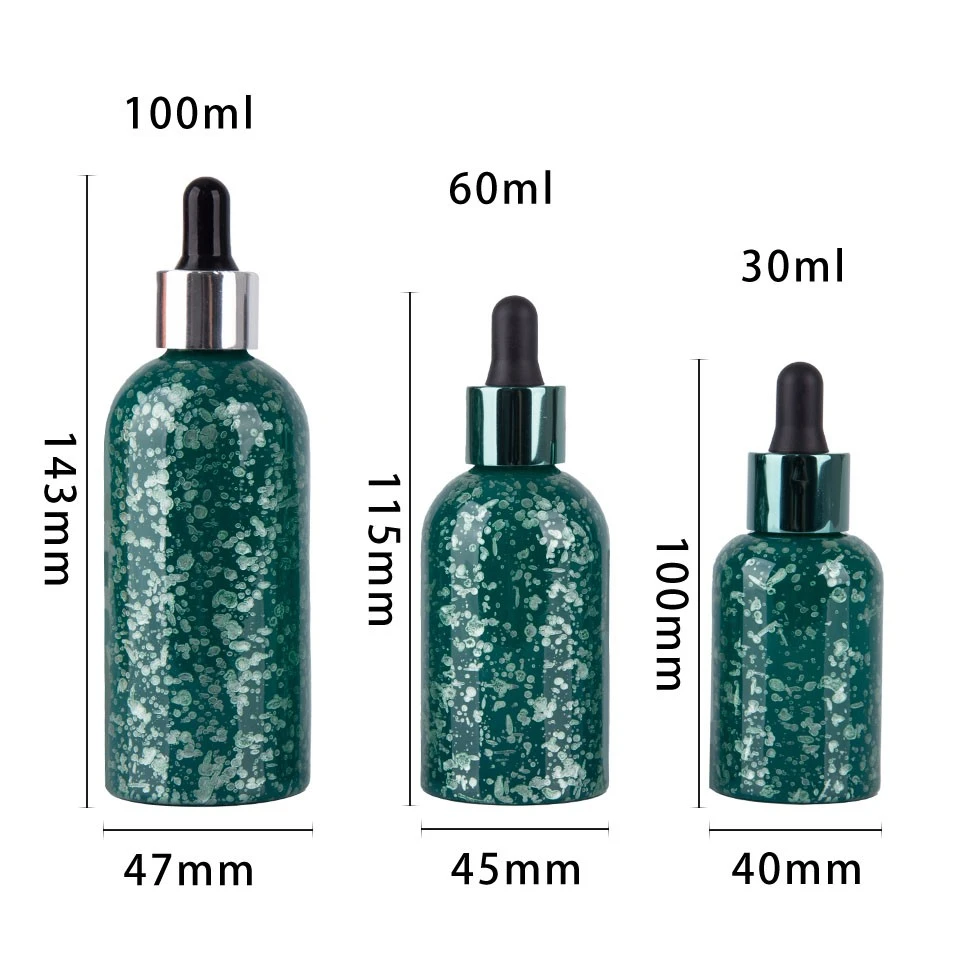

After the bottle is molded, it needs to cool down. Once cooled, the bottle is removed from the mold. The dropper part is then attached. The dropper can be made of the same plastic as the bottle or a different type of plastic or rubber.
Plastic dropper bottles can also be customized. For example, we have Electroplated Glass Cosmetic Dropper Bottles, but there are also plastic versions that can be electroplated. Electroplating plastic involves depositing a thin layer of metal onto the plastic surface to give it a shiny, metallic look.
Key Differences
One of the major differences between the manufacturing processes of glass and plastic dropper bottles is the temperature. Glass requires extremely high temperatures to melt and shape, while plastic can be processed at much lower temperatures. This means that the energy consumption for glass manufacturing is generally higher.
Another difference is in the shaping process. Glass is often shaped using blow - molding, which requires careful control of the air pressure and the molten glass. Plastic, on the other hand, is commonly shaped using injection - molding, which is more precise and can produce complex shapes more easily.
In terms of the finishing touches, glass bottles can withstand more heat - based processes like annealing and screen - printing. Plastic bottles need to be more carefully treated during finishing to avoid melting or warping.
Advantages and Disadvantages
Glass dropper bottles have some great advantages. They are more resistant to chemical reactions, which makes them ideal for storing high - quality cosmetics. They also have a more luxurious look and feel, which can enhance the brand image of the cosmetic product. However, glass is heavier and more fragile than plastic, which can increase shipping costs and the risk of breakage.
Plastic dropper bottles are lightweight, which reduces shipping costs. They are also less likely to break during transportation. However, plastic may not be as chemically resistant as glass, and it may not have the same high - end look.
Conclusion
In conclusion, there are significant differences in the manufacturing processes of glass and plastic cosmetic dropper bottles. Each has its own advantages and disadvantages, and the choice between them depends on various factors such as the type of cosmetic product, the brand image, and the budget.
If you're in the market for cosmetic dropper bottles, whether it's glass or plastic, we're here to help. We can provide you with high - quality products that meet your specific needs. Don't hesitate to contact us for more information and to start a procurement discussion. We look forward to working with you!
References
- "Glass Manufacturing Processes", Glass Association of North America
- "Plastic Injection Molding Basics", Society of Plastics Engineers
Send Inquiry